

Restoring Structural Integrity. Extending Asset Life.
Concrete is the backbone of modern infrastructure—strong, durable, and versatile. Yet no material is impervious to the relentless forces of time, environment, and use. Cracking, spalling, delamination, and corrosion-related deterioration silently compromise structural capacity, safety, and aesthetics. In the Kingdom of Saudi Arabia, where structures face extreme temperatures, coastal saltwater exposure, and aggressive industrial environments, concrete deterioration can accelerate rapidly, threatening the integrity of critical assets. At Arabian Strengthening & Protection Co., we do not simply patch cracks or apply temporary fixes. We diagnose root causes, implement engineered repair solutions, and restore concrete structures to—or beyond—their original design performance. Our approach combines advanced diagnostic assessment, proven repair methodologies, and high-performance materials to deliver lasting results that extend the service life of your assets for decades.
Understanding Concrete Deterioration
Concrete deterioration rarely results from a single cause. Effective repair requires identifying and addressing the underlying mechanisms that drive deterioration. Corrosion of reinforcement is the most common and destructive form of concrete deterioration, occurring when chlorides from de-icing salts, marine environments, or industrial processes penetrate the concrete and break down the passive layer that protects steel reinforcement. Carbonation occurs when carbon dioxide reacts with concrete alkalinity, reducing pH and initiating corrosion even in the absence of chlorides. Alkali-silica reaction (ASR) occurs when reactive aggregates interact with high-alkali cement, causing expansive map cracking that can destroy concrete from within. Sulfate attack from soil or groundwater causes expansion, cracking, and softening of concrete. Mechanical damage from overloading, impact, or settlement creates structural cracking and displacement. Construction defects such as poor consolidation, inadequate curing, or improper jointing create vulnerabilities that accelerate deterioration. Our engineers conduct thorough investigations using advanced diagnostic tools to identify the specific deterioration mechanisms at play, ensuring that our repair strategies address root causes—not just visible symptoms.
Our Repair Methodology
We follow a systematic, multi-stage approach to concrete rehabilitation that ensures durability, compatibility, and long-term performance. The process begins with comprehensive assessment and investigation, where we conduct visual inspection to map cracks, spalls, stains, and distress patterns. We employ advanced non-destructive testing techniques including ground-penetrating radar to locate reinforcement and measure cover depth, half-cell potential mapping to assess corrosion risk, rebound hammer to evaluate concrete strength, ultrasonic pulse velocity to detect internal flaws, and impact-echo to identify delamination. Laboratory testing provides critical data on chloride content, carbonation depth, and petrographic characteristics. Structural analysis determines remaining capacity and required restoration.
Based on assessment findings, our engineers develop a comprehensive repair specification that addresses material selection—choosing compatible repair mortars based on exposure, structural requirements, and application method. We incorporate corrosion mitigation strategies including inhibitors, anti-corrosion coatings, or integration with cathodic protection where required. We evaluate structural considerations including load transfer, reinforcement detailing, and temporary shoring needs, and address aesthetic requirements to match texture, color, and finish for architectural concrete.
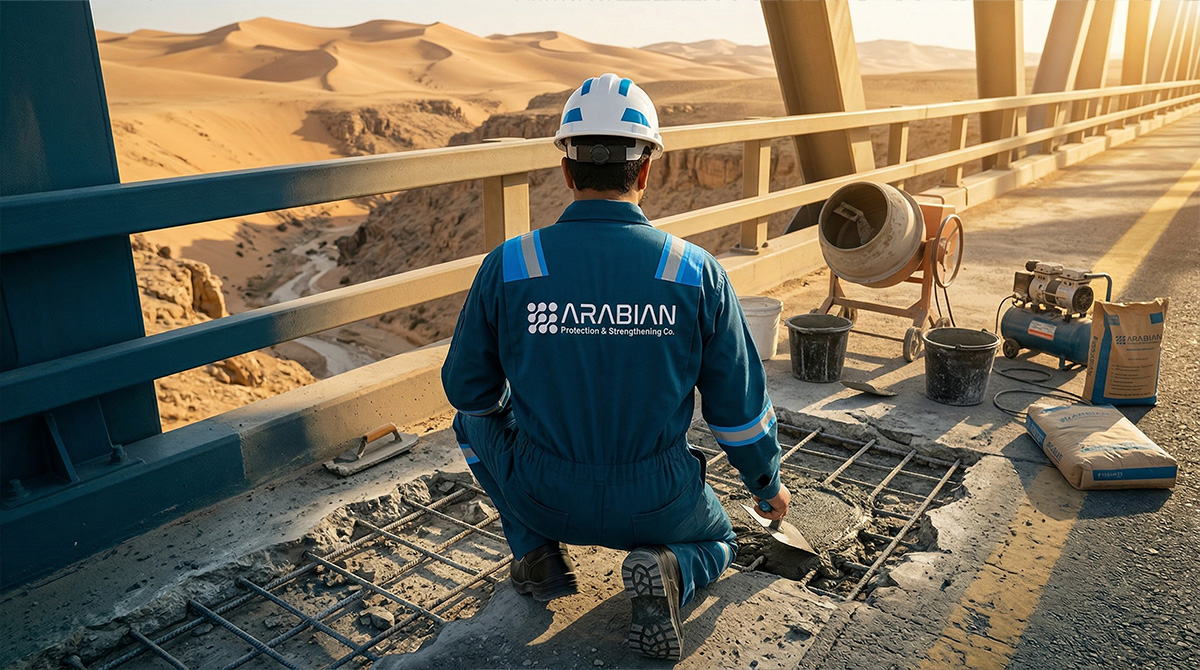
Proper surface preparation is the single most critical factor in repair durability. We employ hydro-demolition to remove deteriorated concrete with high-pressure water, mechanical chipping for precision removal, and abrasive blasting to clean surfaces and achieve the required surface profile for bonding. We expose reinforcement to at least 180 degrees for proper cleaning and coating, ensuring that all corrosion products are removed to bright metal.
Corrosion-damaged reinforcement must be treated to prevent recurrence. We clean reinforcement to bright metal using abrasive blasting or mechanical methods. Where section loss exceeds allowable limits, we splice or replace severely corroded reinforcement. We apply anti-corrosion coatings or corrosion inhibitors to protect the cleaned steel, and add supplemental reinforcement where required for structural restoration.
We apply repair materials using techniques matched to the application. Hand application provides flexibility and accessibility for small patches and vertical or overhead repairs. Sprayed shotcrete or gunite offers high production rates and excellent bonding for large-area repairs and structural sections. Form-and-pour provides precise geometry and controlled placement for deep sections and structural elements. Injection offers minimally invasive sealing for cracks and voids.
Proper curing is essential to achieve design strength, durability, and shrinkage control. We employ moist curing using wet burlap, curing compounds, or plastic sheeting, with temperature control for hot or cold weather applications and surface protection during the curing period. Where required, we apply surface finishes, sealers, or protective coatings to enhance durability and aesthetics.
Repair Materials & Technologies
We utilize a comprehensive range of high-performance repair materials from leading manufacturers, selected for compatibility with the parent concrete and exposure conditions. Cementitious repair mortars include general repair mortars that are polymer-modified and shrinkage-compensated for structural and non-structural applications; low-shrinkage mortars for large-volume repairs where shrinkage control is critical; fast-setting mortars for rapid return to service, ideal for overhead and vertical applications; and lightweight mortars for reduced dead load on slabs and elevated structures.
Epoxy and polymer systems provide high-strength, chemical-resistant solutions. Epoxy bonding agents ensure monolithic bond between repair and parent concrete. Epoxy mortars deliver high-strength, chemical-resistant repairs for industrial applications. Epoxy injection resins offer low-viscosity, high-strength sealing for structural cracks.
Shotcrete and gunite are ideal for large-area repairs and structural sections. Wet-mix shotcrete uses pre-mixed material with high production rates, while dry-mix gunite allows on-site mixing, excellent for overhead applications. Structural shotcrete incorporates reinforcement for load-bearing restoration.
Specialty materials enhance durability and performance. Corrosion inhibitors, either migrating or admixed, protect reinforcement from future corrosion. Silanes and siloxanes are penetrating sealers that reduce moisture ingress without altering appearance. Anti-carbonation coatings are breathable coatings that prevent CO₂ penetration. Fiber-reinforced polymers provide structural strengthening in conjunction with repair.
Applications Across Industries
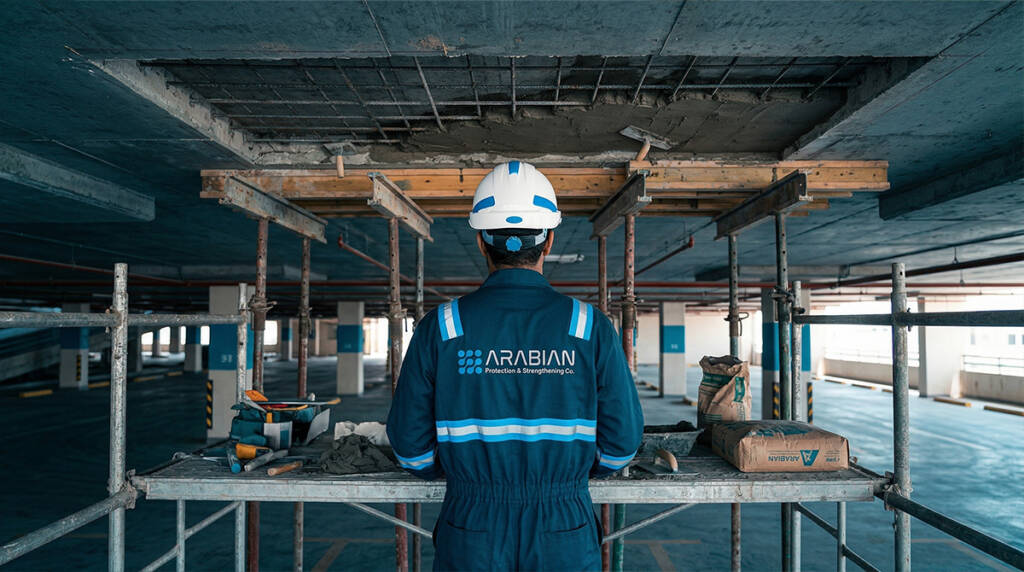
Our concrete rehabilitation expertise spans a diverse range of structures and industries across the Kingdom. For parking structures, we perform spall repair, overhead slab rehabilitation, expansion joint replacement, and corrosion mitigation. For bridges and viaducts, we conduct pier and abutment repair, deck patching, joint rehabilitation, and post-tensioning duct repairs. For industrial facilities, we repair equipment foundations, chemical spill areas, and heavy-load floor slabs. For commercial buildings, we address façade repairs, balcony rehabilitation, basement walls, and column strengthening. For water and wastewater structures, we perform tank and basin lining, channel repairs, clarifier rehabilitation, and corrosion protection. For residential properties, we address foundation repairs, retaining walls, and slab-on-grade restoration. For heritage structures, we employ sensitive repairs using compatible materials and architectural matching.
Why Choose Arabian Strengthening & Protection Co. for Concrete Rehabilitation
Clients choose Arabian Strengthening & Protection Co. for our engineered solutions, root-cause focus, material expertise, integrated capabilities, quality assurance, and minimal disruption. Every repair is designed by qualified structural engineers based on thorough investigation—not guesswork. We address the underlying mechanisms of deterioration to prevent recurrence and extend repair life. Our team is trained in the application of all major repair material systems, ensuring proper mixing, placement, and curing. We combine concrete repair with complementary services—waterproofing, cathodic protection, and structural strengthening—for comprehensive asset management. We implement rigorous quality control protocols including material testing, bond strength verification, and post-repair monitoring. Through strategic scheduling and phased work, we maintain operational continuity during repairs.
